
CPQ for SaaS: What Salesforce Revenue Cloud Gets Right (and Wrong)
SaaS pricing is structurally different from traditional product selling. Subscriptions renew. Customers upgrade mid-cycle. Usage spikes unpredictably. Contracts co-term across multiple products. A CPQ system built for physical goods or one-time license sales doesn’t handle this well.
Here’s where Revenue Cloud genuinely fits SaaS - and where it still has rough edges.
What Revenue Cloud Gets Right for SaaS
Usage-Based Pricing
Revenue Cloud handles usage-based billing natively. You define usage tiers, rate cards, and rollup logic; Revenue Cloud tracks usage events and calculates charges at billing time. This is a significant improvement over legacy CPQ, which required workarounds or Salesforce Billing extensions to handle anything beyond flat-rate subscriptions.
For teams selling consumption-based products (API calls, seats above a floor, storage tiers), this is a genuine win. See the usage-based selling guide for configuration details.
Subscription Amendments
Mid-cycle changes - upgrades, downgrades, add-ons, partial cancellations - are handled through Revenue Cloud’s asset-based ordering model. An amendment creates a new order that adjusts the active asset, prorates billing automatically, and maintains a clean audit trail.
This was one of the most painful areas in legacy CPQ. Revenue Cloud handles it substantially better.
Co-Terming
Revenue Cloud supports contract alignment across multiple subscriptions. When a customer buys a second product mid-contract, you can align the end date to match existing subscriptions and prorate the charge. The logic is configurable via price adjustments and contract term rules.
Renewals
Renewal management in Revenue Cloud is tied to the Asset object. As assets approach their end date, you can trigger renewal flows via Process Builder or Flow. Revenue Cloud doesn’t have a dedicated “renewal console” the way some ISV solutions do, but the data model supports automated renewal quoting cleanly.
Where Revenue Cloud Still Falls Short for SaaS
Quote Documents
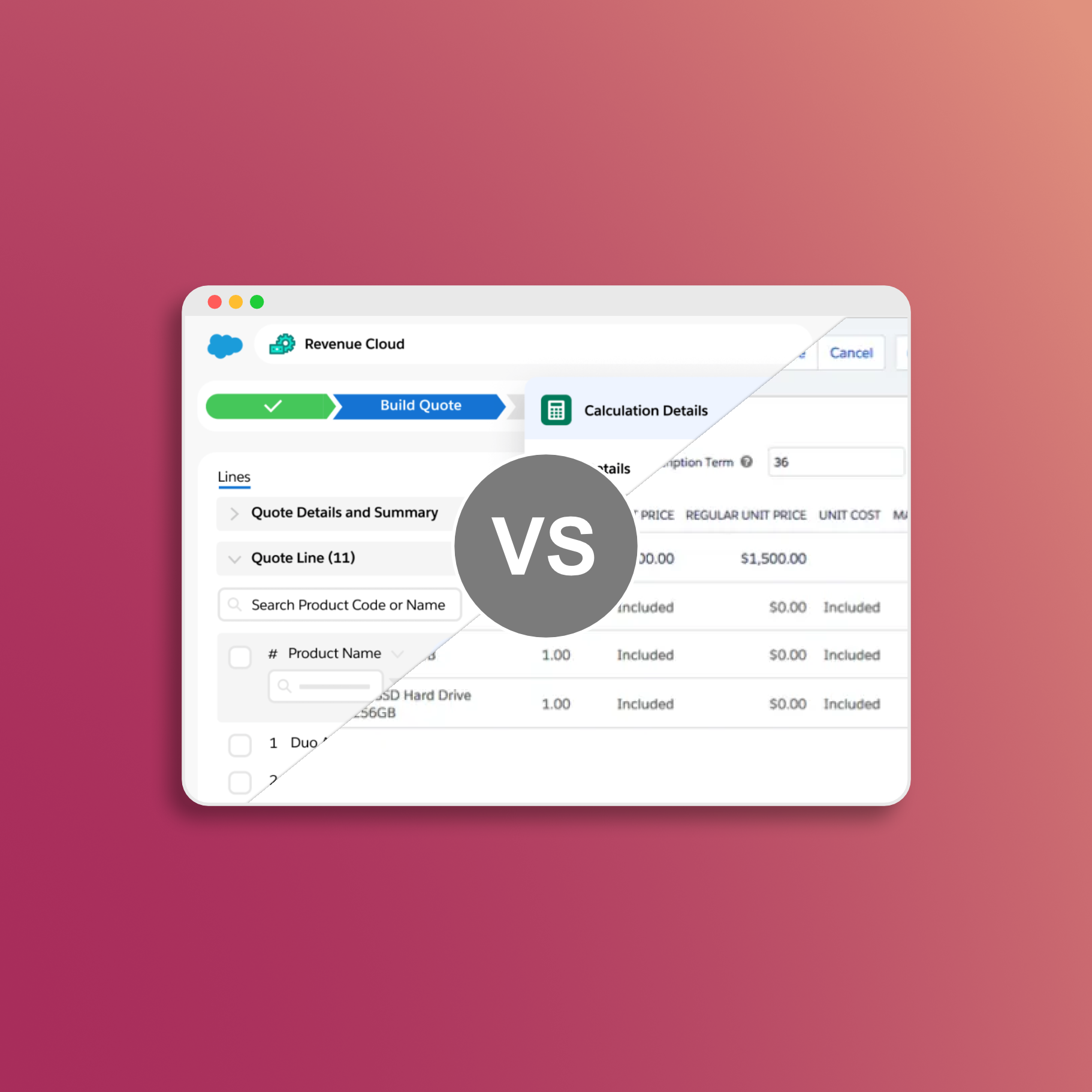
This is the most common complaint from SaaS teams evaluating Revenue Cloud. Legacy CPQ shipped with polished quote templates - branded PDFs with line items, pricing summaries, and DocuSign integration - out of the box. Revenue Cloud’s native quote document support is significantly thinner.
Most SaaS teams either:
- Build a custom quote output using LWC + PDF generation
- Use a third-party CPQ or quoting layer on top
Revenue Cloud has the pricing engine. What it's missing: professional PDF templates, hosted quote links, and buyer acceptance tracking. SilkQuote closes that gap. Free on AppExchange, no code required:
- Generate - branded PDF quotes from any Opportunity in one click
- Host and share - prospects accept or decline directly in a browser, no Salesforce account needed
- Track - every open, view, acceptance, and decline logged to the Opportunity timeline
- Sign - DocuSign and Adobe Sign integration included
Free to install. Unlimited users and quotes. Deploys same day.
Get SilkQuote free on AppExchange →Guided Selling
Legacy CPQ had product rules and guided selling wizards that walked reps through the configuration process based on customer inputs. Revenue Cloud’s configurator is cleaner, but guided selling flows (dynamic question-driven configuration) require more custom LWC work than legacy CPQ did.
This is improving with each Salesforce release, but if your sales process involves complex discovery questions that should drive product recommendations, budget time for custom configuration work.
Implementation Complexity
SaaS companies often have relatively straightforward product catalogs but complex pricing models (ramp deals, multi-year discounts, freemium-to-paid upgrade paths). Revenue Cloud’s pricing engine is fully capable of handling these - but it takes more setup time than you’d expect if you’re coming from a simpler quoting tool.
The Honest Bottom Line
For SaaS companies with more than ~50 reps, complex subscriptions, or usage-based products: Revenue Cloud is the right long-term platform. The usage-based pricing, amendment handling, and integrated billing are genuinely better than any alternative in the Salesforce ecosystem.
For smaller SaaS teams that mainly need clean quote PDFs and basic subscription tracking: the implementation overhead may not be justified. Evaluate whether a lighter quoting tool (including free options like SilkQuote) meets your needs first.
Next Steps
- Quote-to-Cash software for Revenue Cloud teams - full Q2C stack breakdown
- Usage-based selling in Revenue Cloud - configuration guide
- Free Revenue Cloud trial - test the SaaS use cases yourself